
Scoping call
We understand the organisation, the decision ahead, and what success would look like.

We work with almost any organisation doing good. A team of 4–6 student consultants and a dedicated Team Leader delivers uniquely affordable strategy through one full consulting cycle.
Start here
There is no form and no application. An email is the whole process, and it does not need to be a polished brief.
Three things are enough to start: who you are, what the challenge is, and what a useful answer would let you decide. If the problem is still vague, say that. Working out the real question is part of what the first conversation is for.
Our focus is social impact, but it is not a gate. Out-of-scope inquiries are welcome, and the branch takes projects case by case.
Consulting cycles: October–January and March–June. If you reach us between cycles, we will tell you when the next one opens rather than leave you waiting.
One consulting cycle
The engagement follows the cycle rather than a made-up week count. Scope and cadence adapt to the organisation and the problem.
We understand the organisation, the decision ahead, and what success would look like.
Scope, deliverables, ways of working, and responsibilities are written down before work begins.
4–6 consultants and a Team Leader research, test, and build the recommendation with regular check-ins.
You receive the final strategy deck and every underlying analysis used to reach it.
Our work
Every engagement ends in a decision you can act on, with the reasoning left visible.
Open a case to see the question, method, recommendation and next steps through a focused selection of real project exhibits.
Partnership strategy
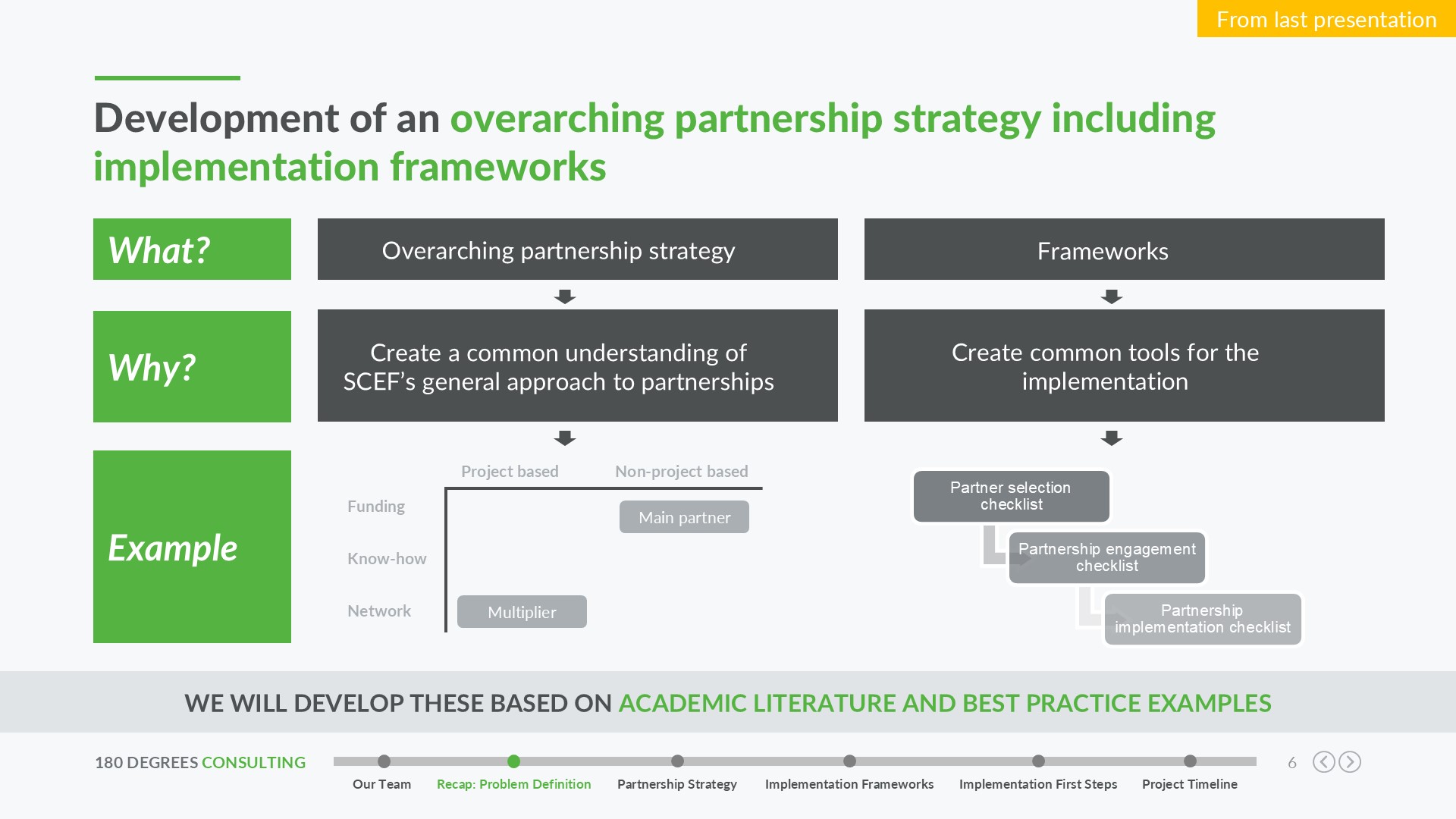
SCEF needed a repeatable way to choose, manage and evaluate partnerships.
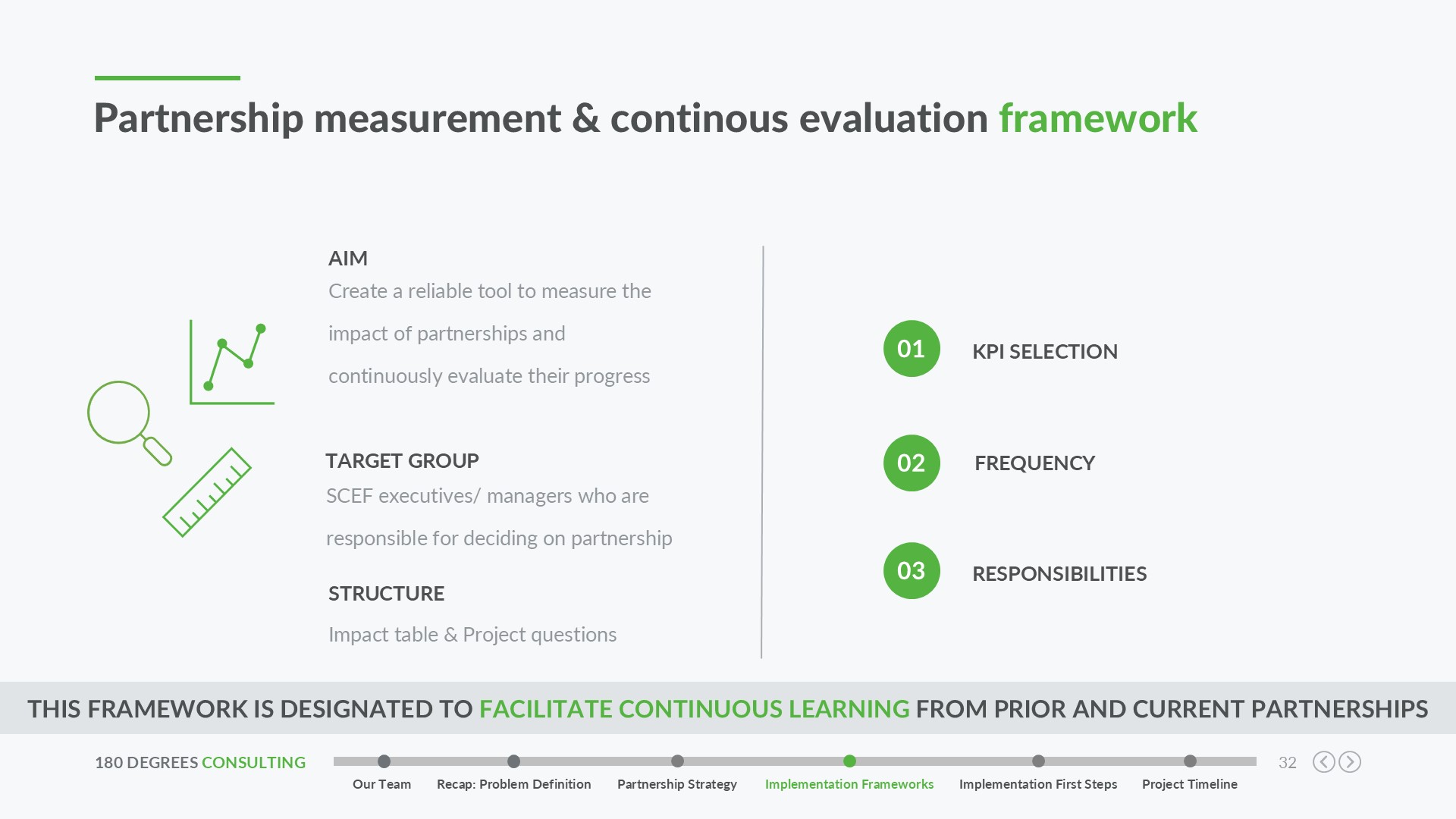
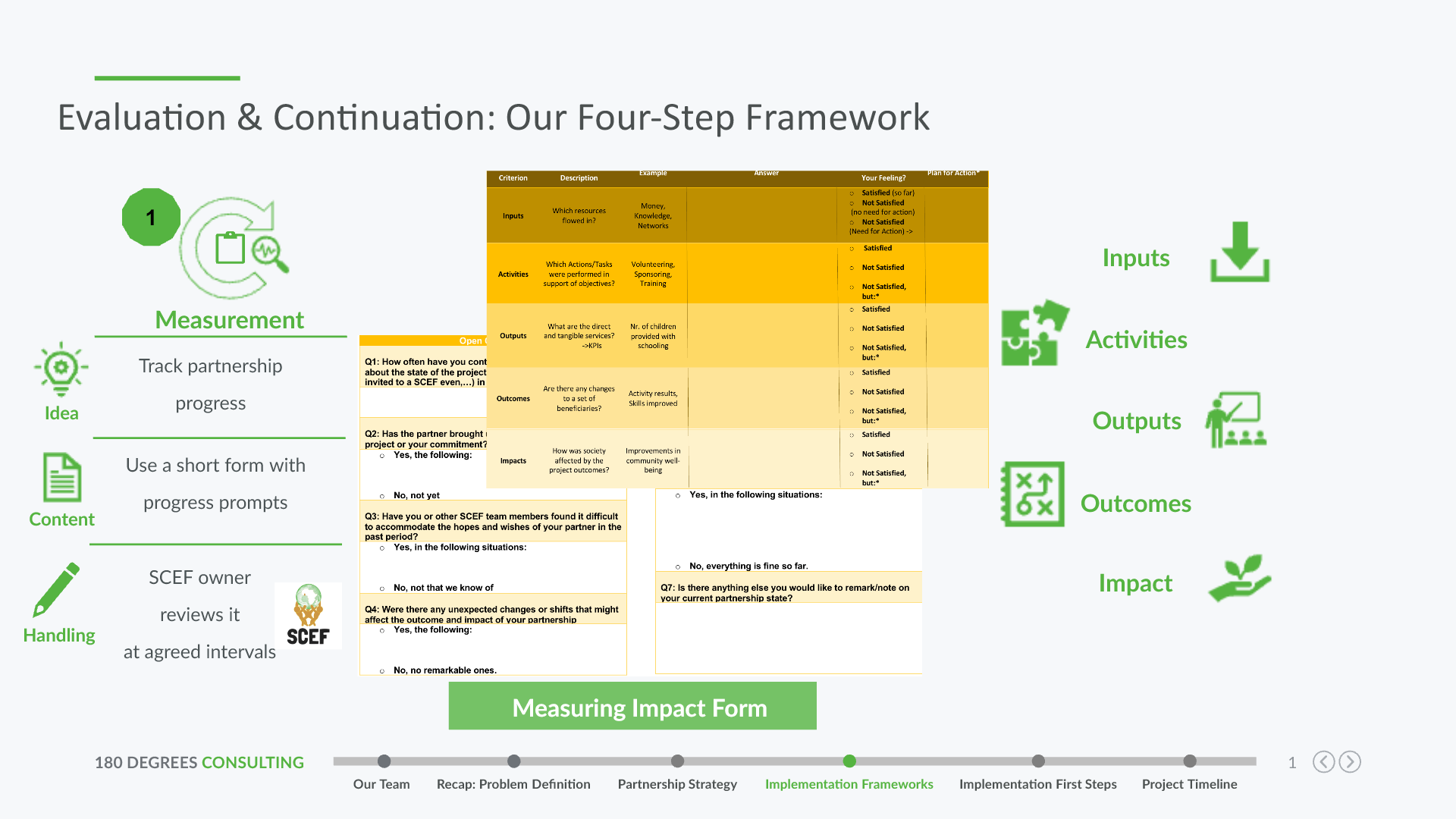
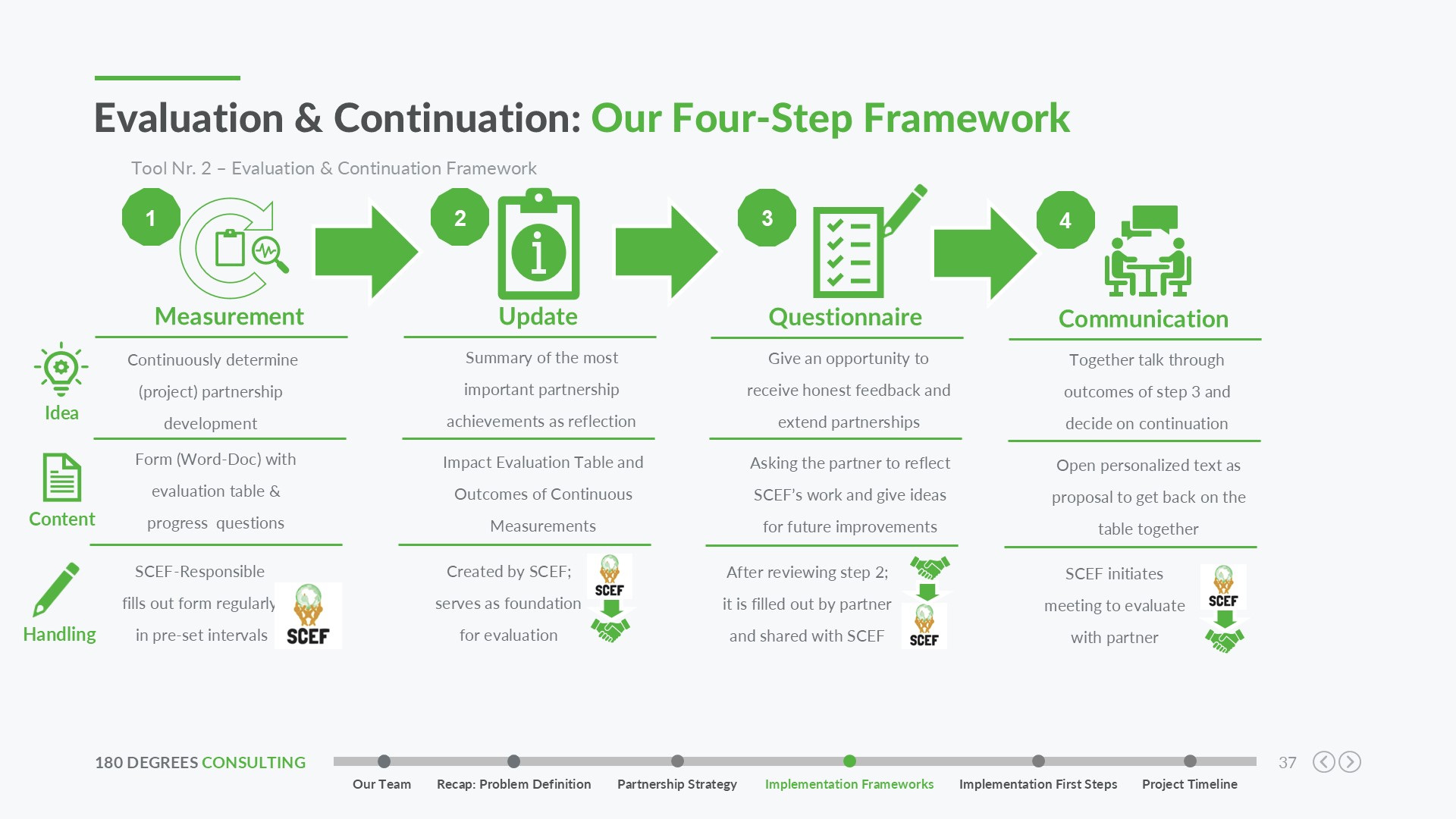
Delivered: a strategy architecture, measurement logic, evaluation loop and practical tools.
Inspect 5 source slidesMarket assessment
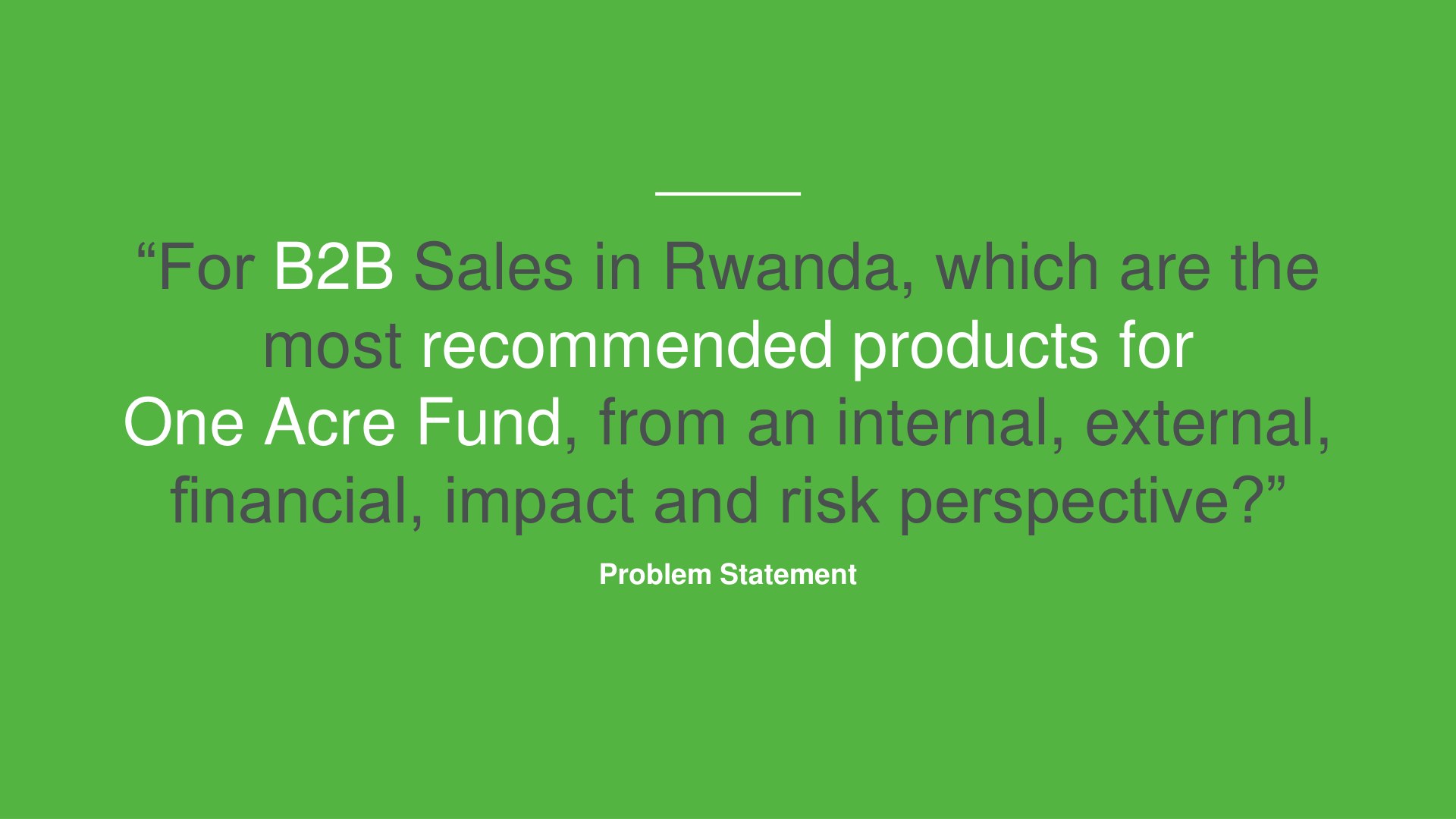
One Acre Fund was deciding which product opportunities to take forward in Rwanda.
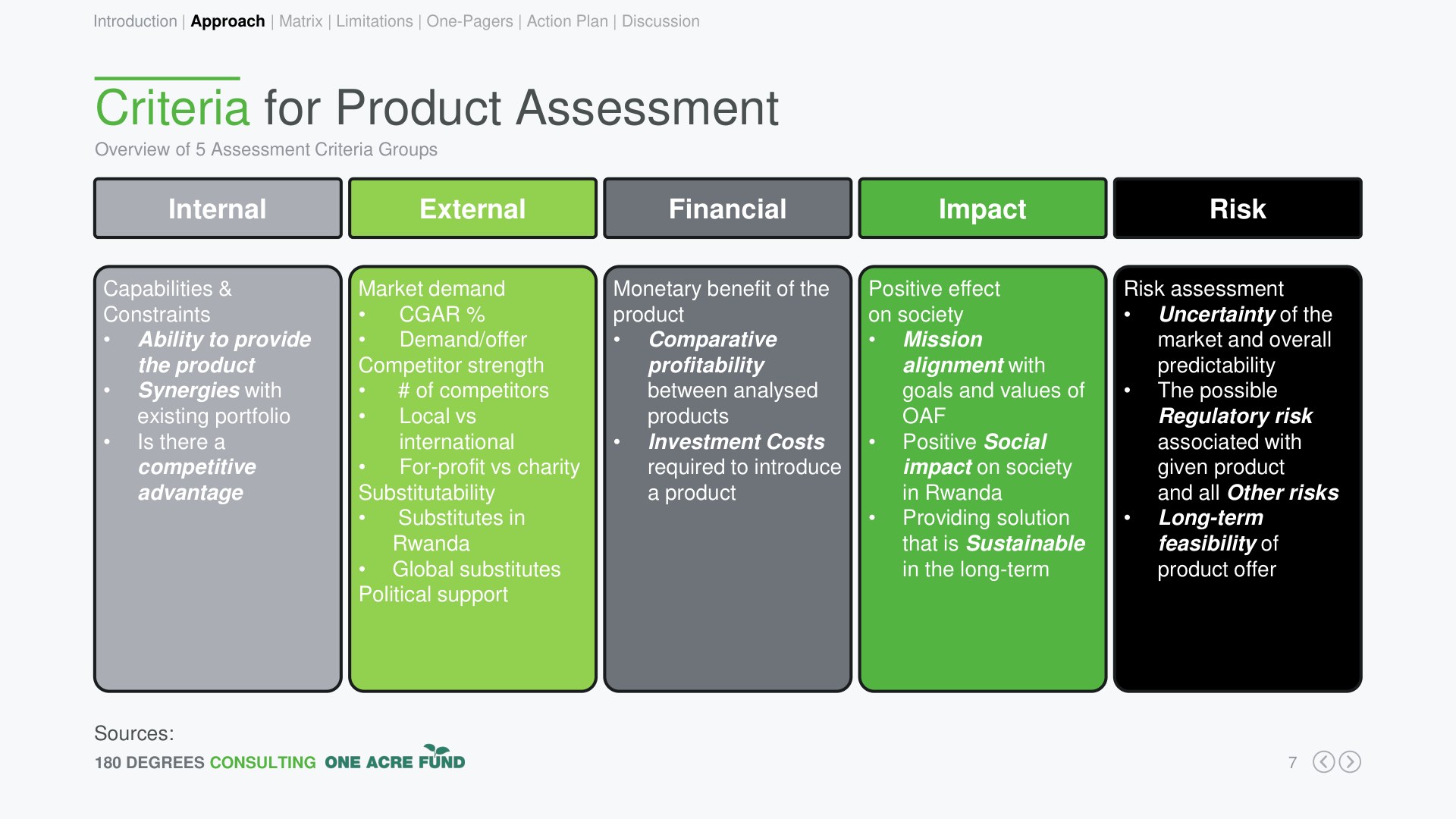
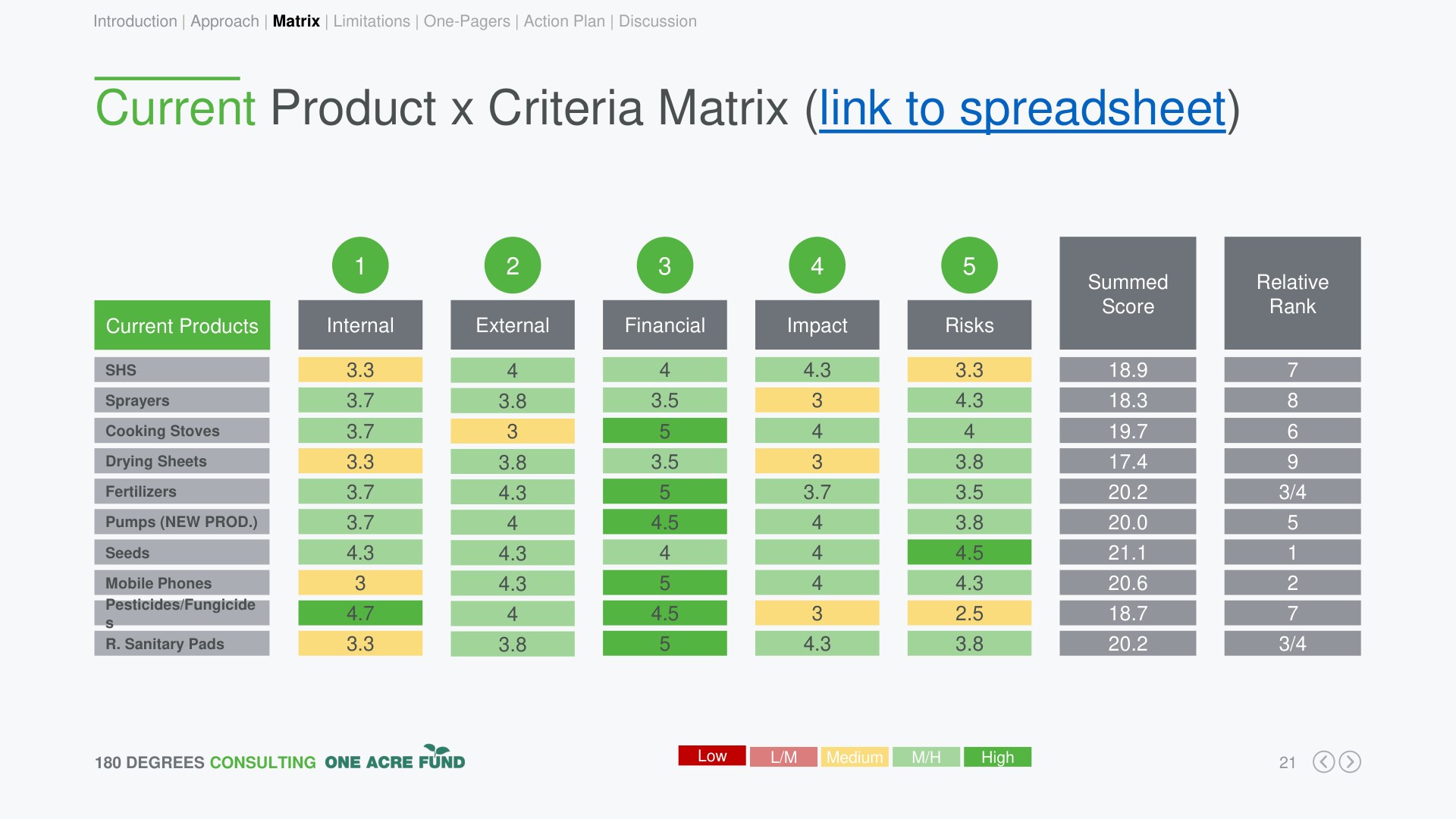
Delivered: a decision question, explicit criteria, comparative scoring and a sequenced next step.
Inspect 5 source pagesDigital presence
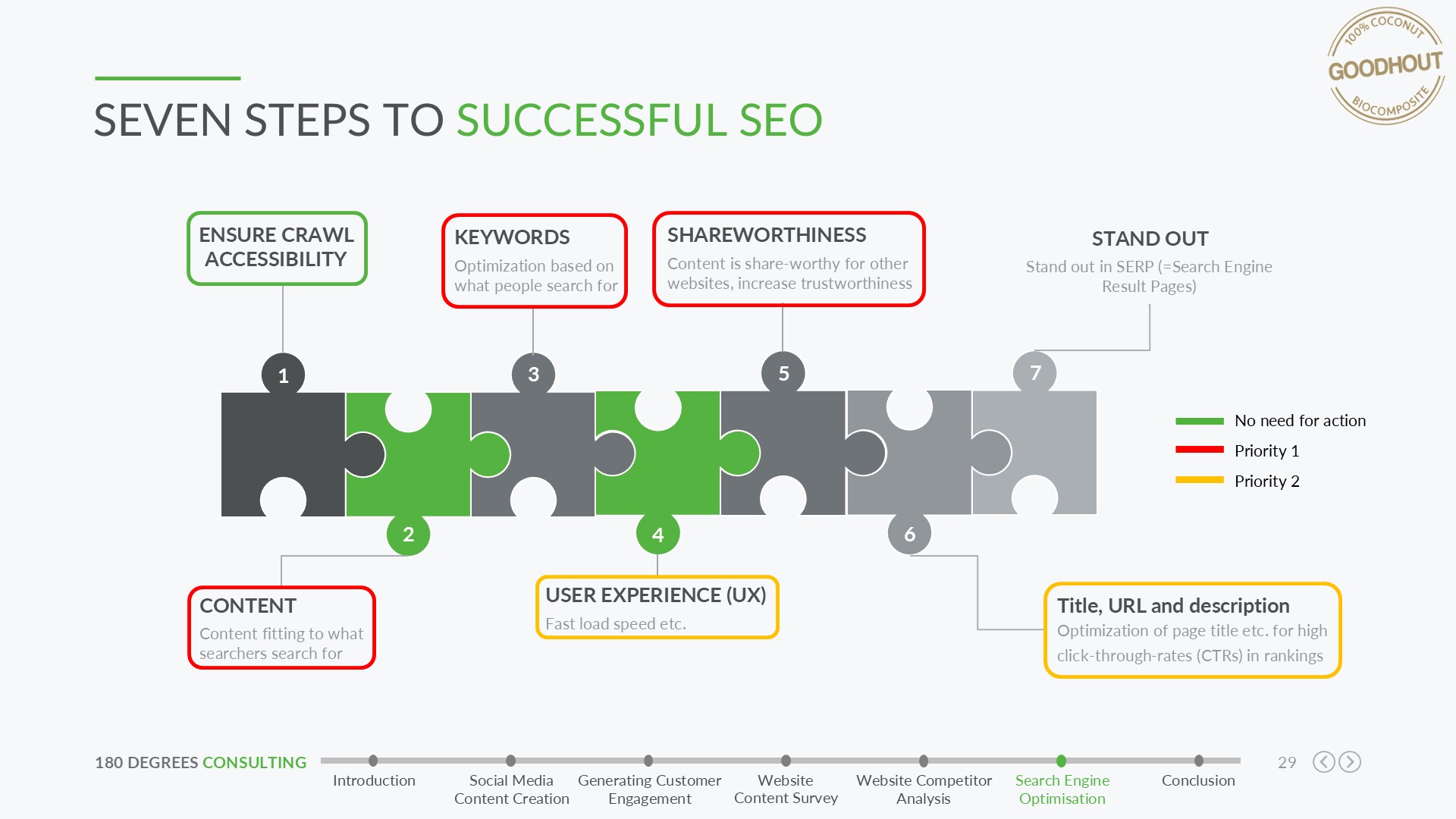
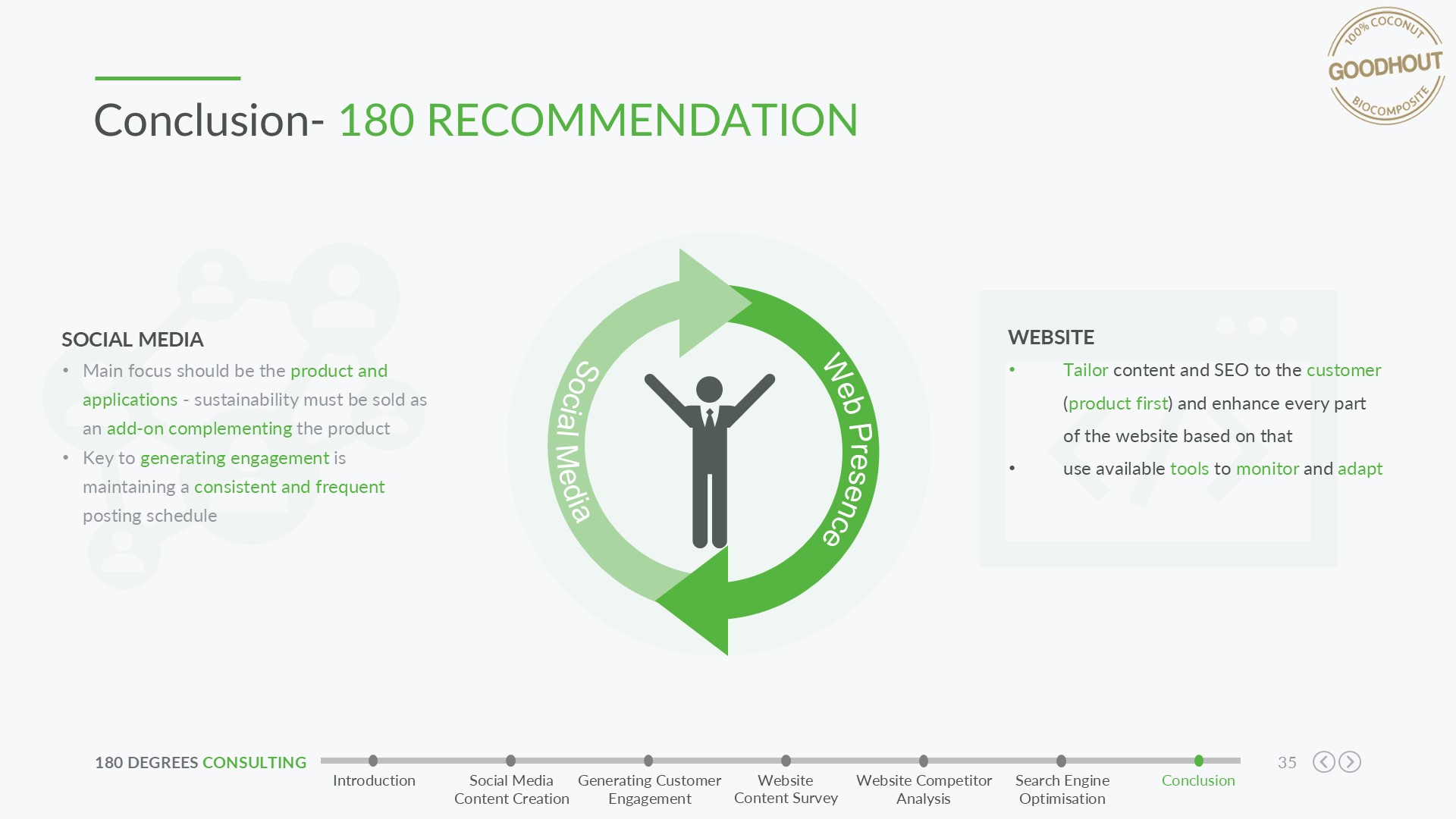
GoodHout needed to decide how a small team should build a clearer web and social presence.
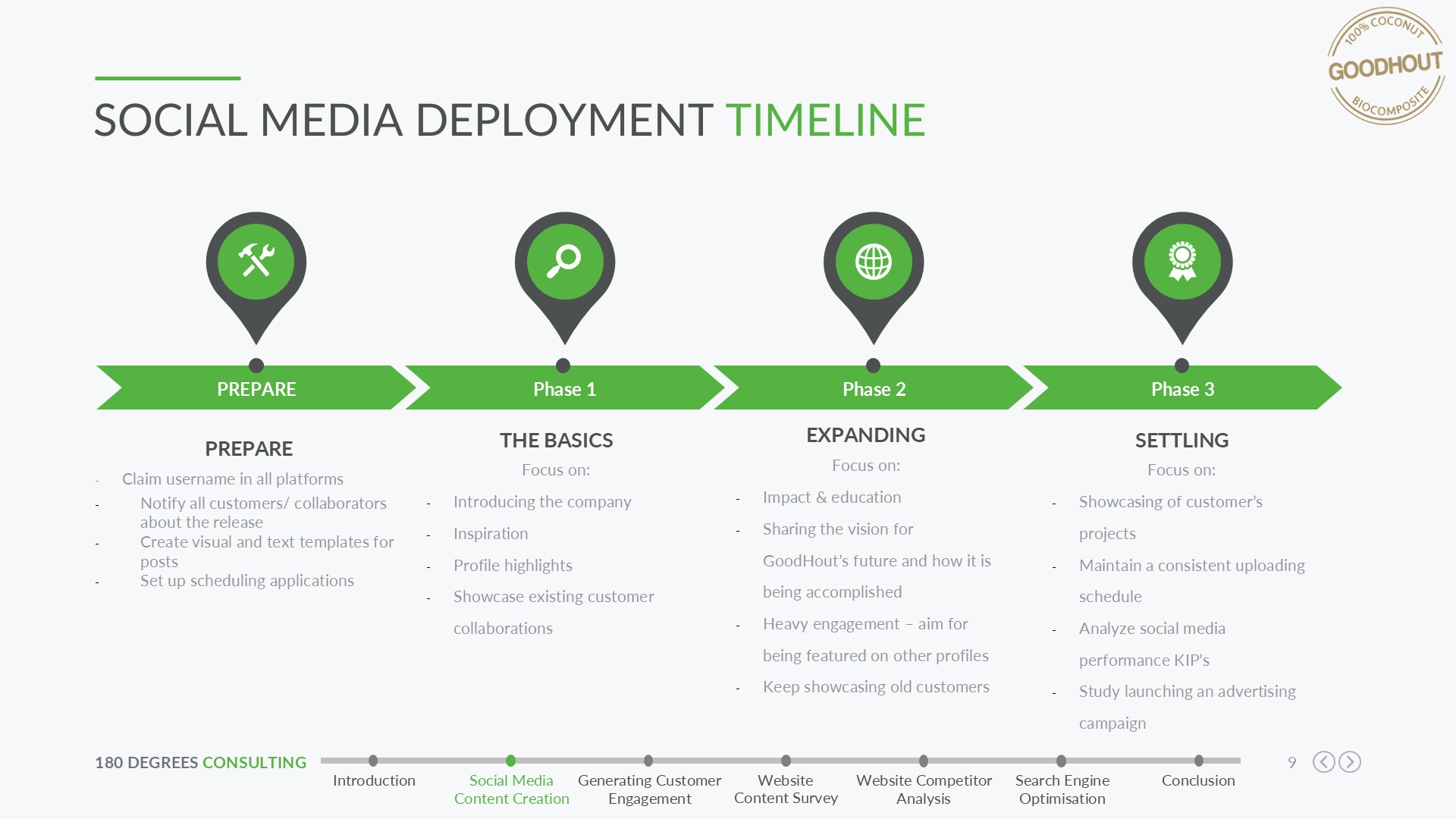
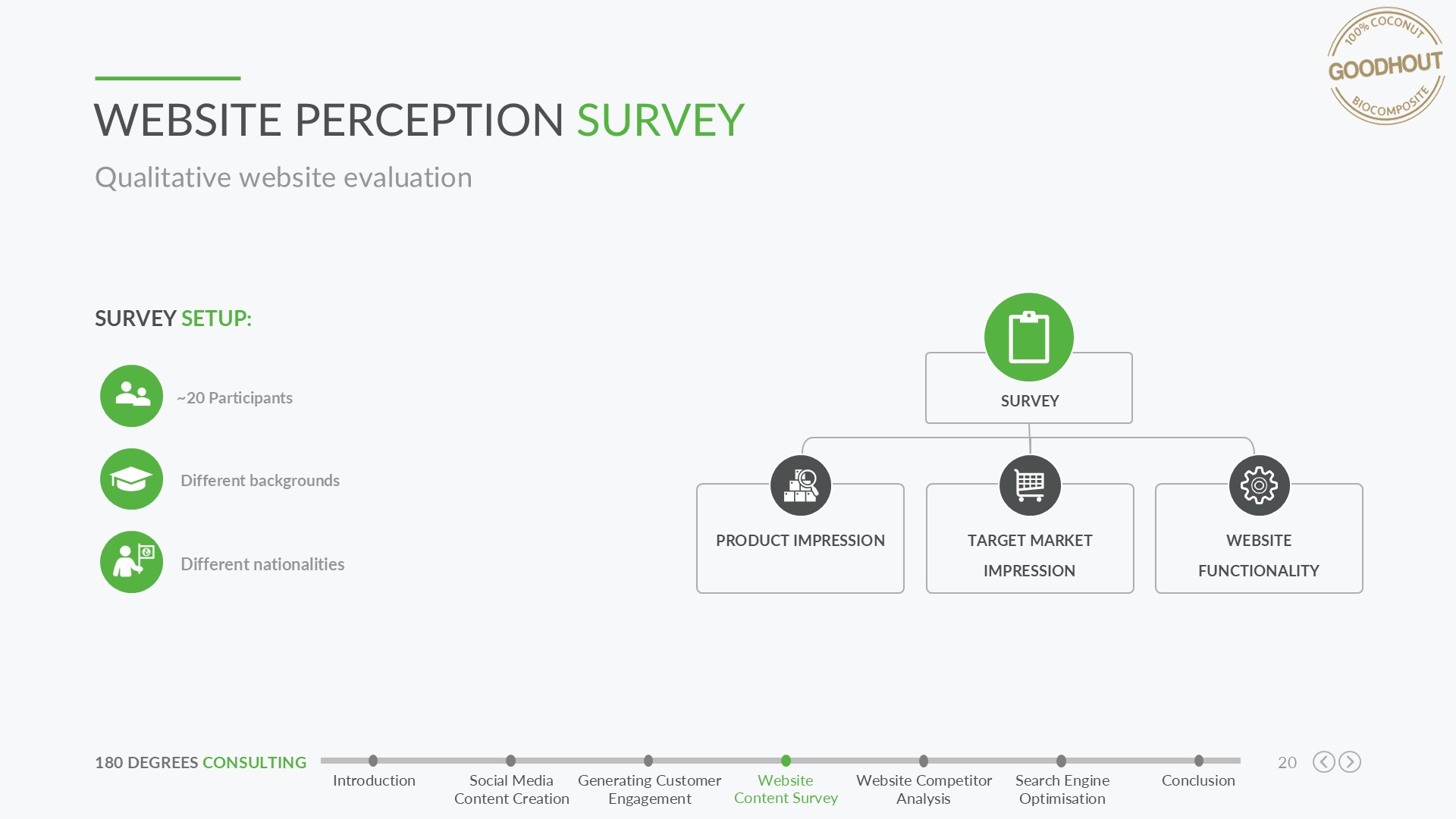
Delivered: a phased social plan, website review scope and final channel recommendations.
Inspect 4 source slidesFinancial sustainability
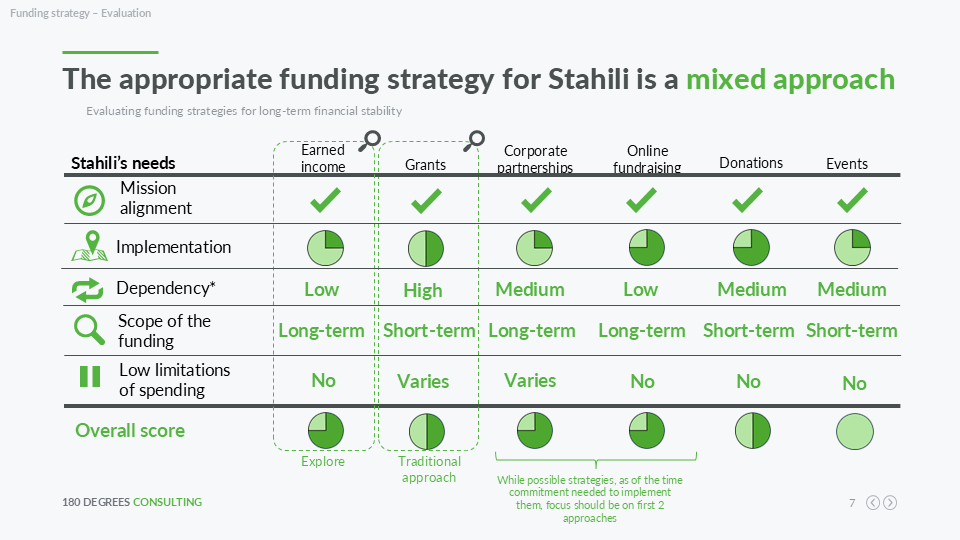
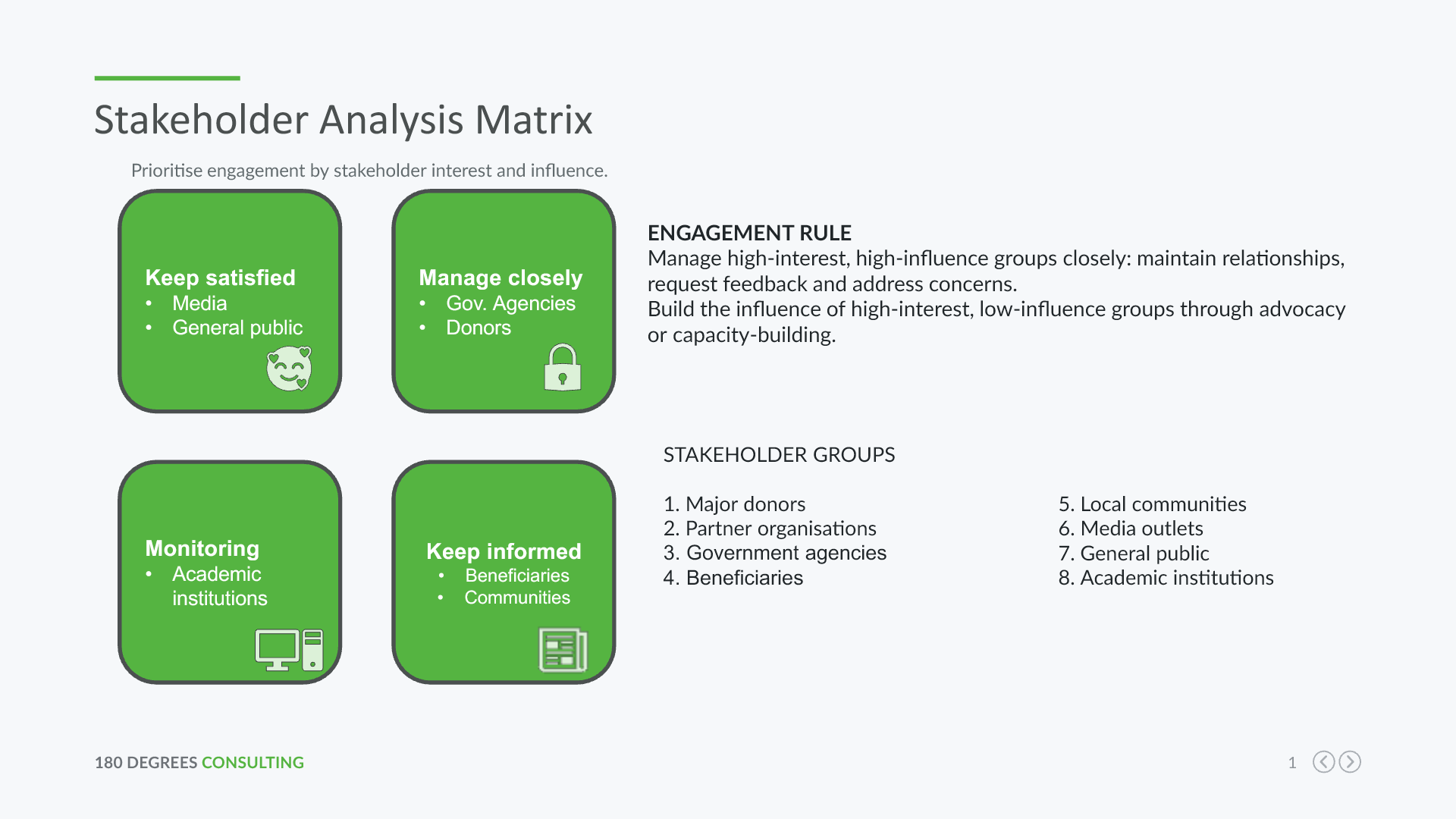
Stahili needed to reduce funding dependency while managing a broad stakeholder set.
Delivered: a funding comparison and a stakeholder prioritisation matrix.
Inspect 2 source slidesMarket positioning
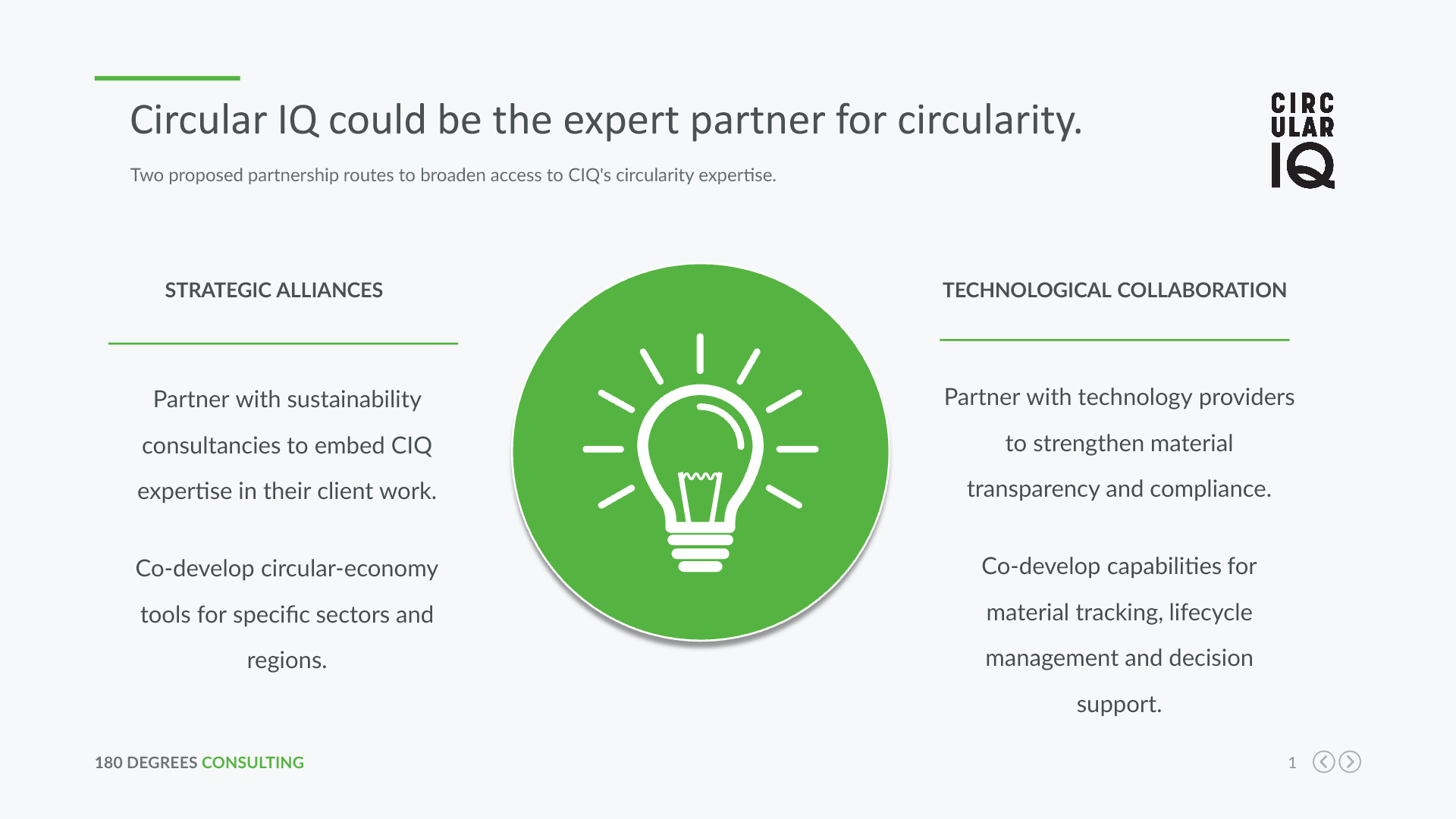
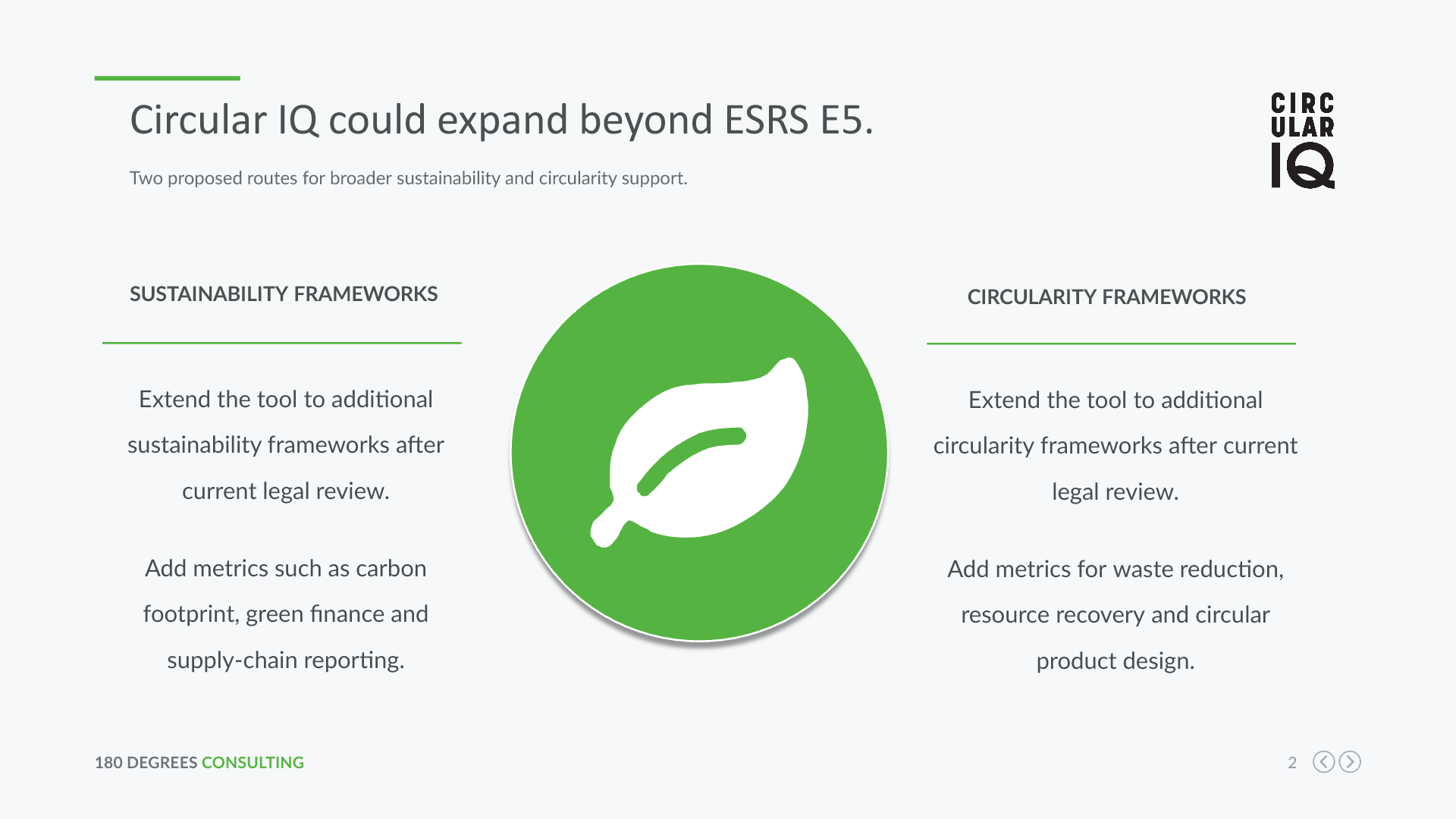
Circular IQ was assessing partnerships and services beyond its current reporting focus.
Delivered: a proposed collaboration model and expansion roadmap.
Inspect 2 source slidesPartnership strategy
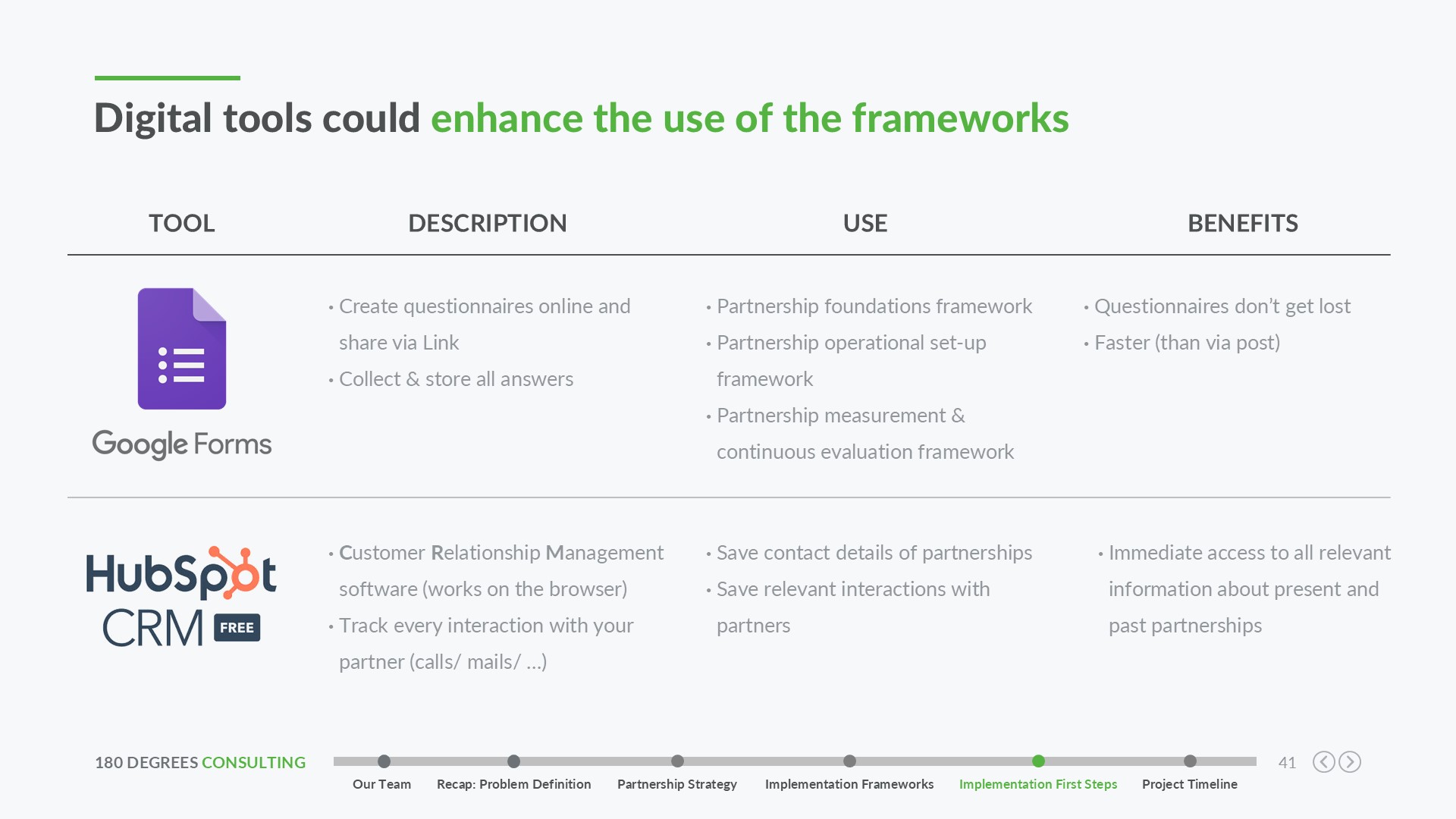
The sequence moves from strategy definition to measurement, evaluation and day-to-day tooling.
Market assessment
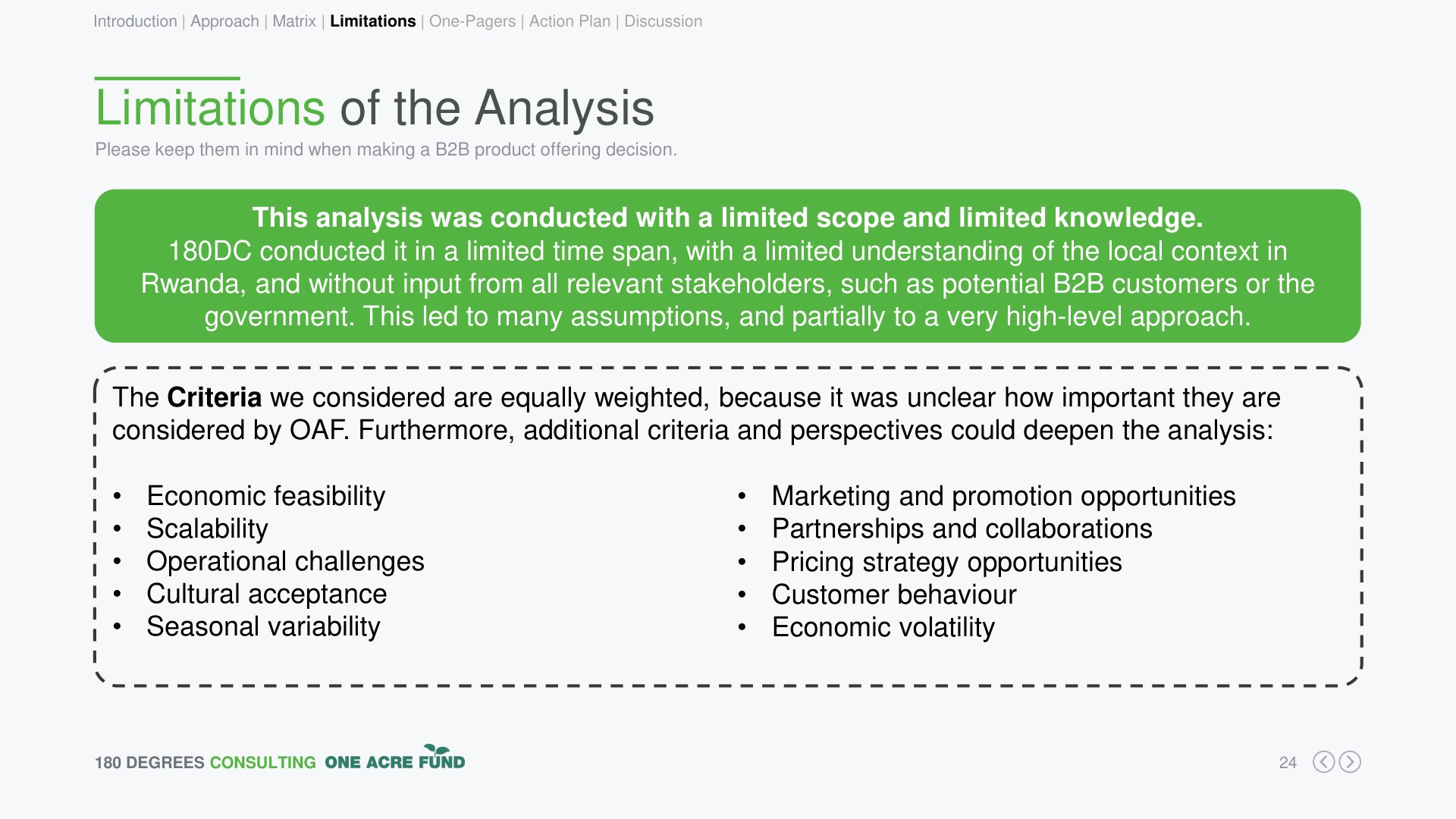
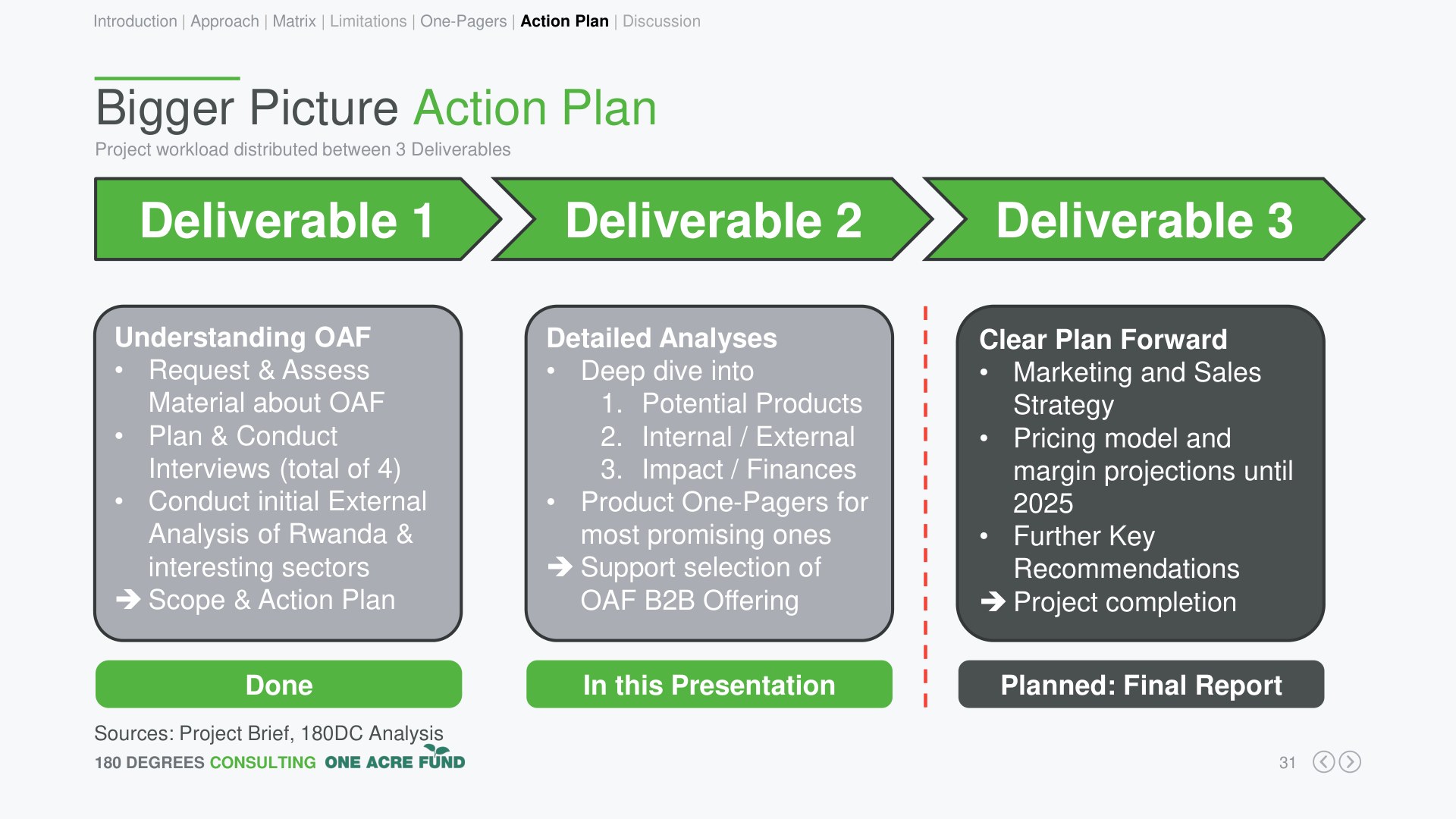
The sequence makes the decision question, criteria, scoring and next action visible from start to finish.
Digital presence
This compact sequence moves from a phased plan and website review to prioritised recommendations.
Financial sustainability
Two exhibits connect a funding decision with the stakeholder focus needed to support it.
Market positioning
Two exhibits connect a proposed partnership model with a focused route for expansion.
Seven starting points
These are the branch's current service areas. We assess every project individually, and out-of-scope inquiries are welcome.
Putting the right tools and processes in place so a small team stops losing hours to manual work.
Reaching the audiences your mission serves, and the donors and volunteers who sustain it.
Building funding models and cost structures that survive beyond the next grant cycle.
Evidence on where demand, partners, and competition actually are before you commit resources.
Finding where effort leaks out of your processes and redesigning them around your capacity.
Defining and tracking the numbers that prove your work works, for boards and funders.
Support with contracts, compliance, and governance to help your mission navigate risk more confidently.
Next step
A short conversation is enough to see whether the challenge, timing, and cycle fit.